
August 2026 Market UpdateIn August 2026, GTA new listings fell 14%, while sales remained fairly steady, down just 2%.With fewer homes available, competition could increase and put upward pressure on

Dated: July 3 2026
Views: 53
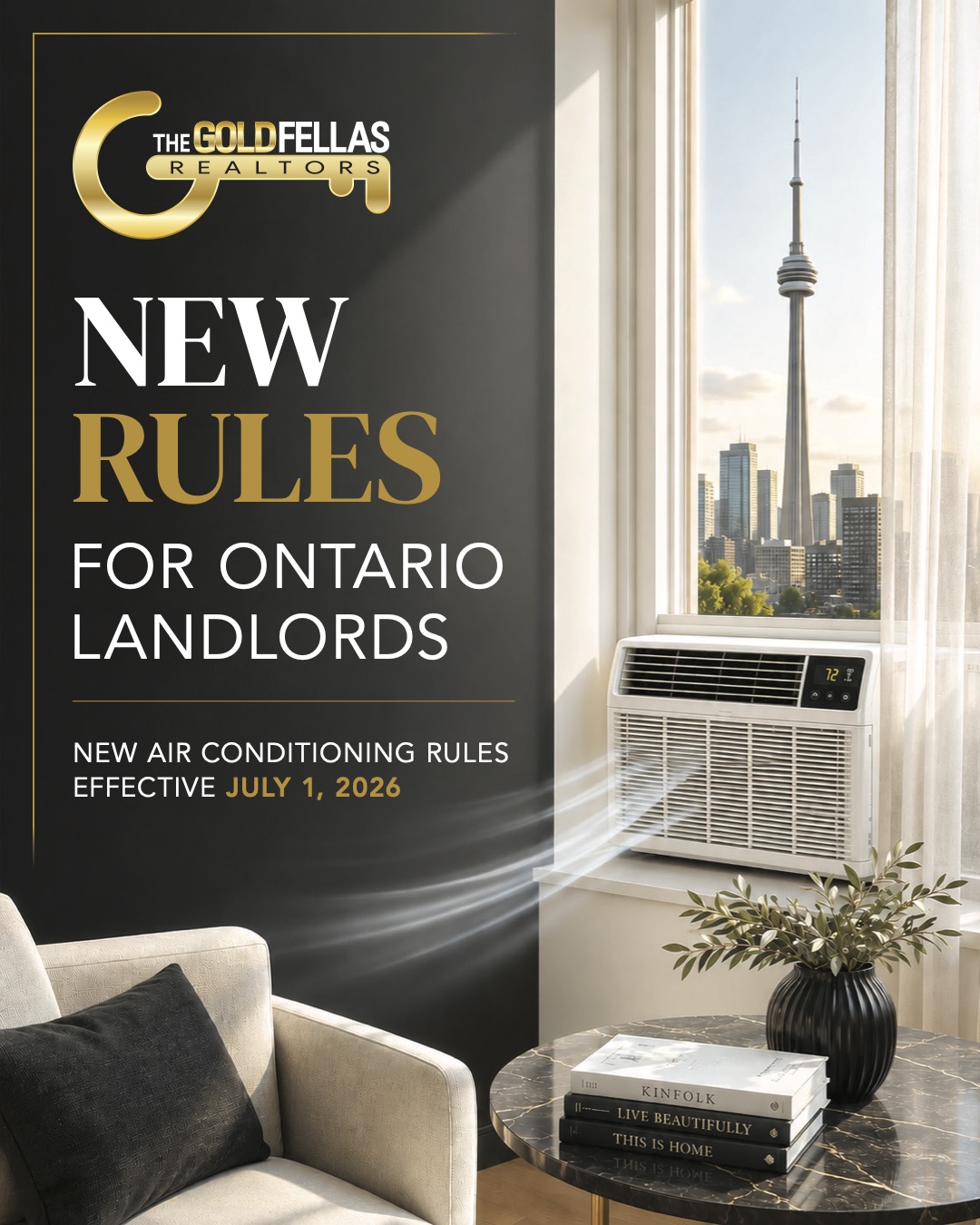
If you own rental property in Ontario, there's an important legislative update you should be aware of.
Effective July 1, 2026, new rules under Ontario’s Residential Tenancies Act allow tenants to install and use a portable or window air conditioner when air conditioning isn’t already supplied by the landlord, provided certain conditions are met.
When a landlord does not provide air conditioning, tenants may install their own portable or window air conditioner, provided they comply with the new requirements.
Where the landlord pays for electricity, tenants must:
The above safety and compliance requirements apply to air conditioners installed on or after July 1, 2026.
If a tenant installed a portable or window air conditioner before July 1, 2026, the safety and compliance requirements still apply.
However, those tenants are not required to:
In certain prescribed circumstances, a landlord may prohibit a tenant from installing an air conditioner.
However, at this time, those circumstances have not yet been defined, meaning landlords should not assume they have the right to prohibit tenants from installing an air conditioner.
If the landlord pays for electricity and the tenant installs an air conditioner on or after July 1, 2026, the landlord may raise the rent to recover the actual cost or a reasonable estimate of the additional electricity used.
There are important limitations:
Unlike traditional rent increases, these adjustments:
Moreover, even if an LTB order currently stops the landlord from raising rent on a rental unit—for example, because the landlord has not yet completed required repairs or complied with work orders—that order does not block the air conditioning rent increase.
Landlords may inspect a rental unit to verify that an air conditioner has been installed safely and complies with the legislation.
As with any inspection under the Residential Tenancies Act, proper written notice must be provided before entering the rental unit.
For landlords, these changes introduce new responsibilities while also providing a process for recovering eligible electricity costs in certain situations.
Whether you’re a first-time landlord or an experienced investor, staying informed about changes affecting Ontario rental properties can help you protect your investment and avoid costly surprises.
If you're looking to grow your rental portfolio or have questions about Ontario's rental market, reach out any time.
We have you covered.
Sources:
This article is intended for general informational purposes only and should not be considered legal advice. If you have questions about how this legislation applies to your specific situation, consult a qualified legal professional.

Zubin is an award-winning ReMax Realtor® with an impeccable track record of sales and customer service, having established himself as a Real Estate Agent that walks the walk, also being a passionate ....
August 2026 Market UpdateIn August 2026, GTA new listings fell 14%, while sales remained fairly steady, down just 2%.With fewer homes available, competition could increase and put upward pressure on
July 2026 Market UpdateHere’s your real estate market minute for July 2026Last month, the Toronto real estate market experienced tighter conditions compared with the same period last year
June 2026 Market Update🏡 Here’s your market update for June 2026!In June 2026, the market continued its upward momentum, with sales nearly 10% higher than a year ago and new listings down
New Air Conditioning Rules Every Ontario Landlord Should KnowIf you own rental property in Ontario, there's an important legislative update you should be aware of.Effective July 1, 2026, new rules
 Toronto Real Estate Board (TRREB); All information deemed reliable but not guaranteed. All properties are subject to prior sale, change or withdrawal. Neither listing broker(s) or information provider(s) shall be responsible for any typographical errors, misinformation, misprints and shall be held totally harmless. Listing(s) information is provided for consumer's personal, non-commercial use and may not be used for any purpose other than to identify prospective properties consumers may be interested
in purchasing. The data relating to real estate for sale on this website comes in part from the Internet Data Exchange program of the Multiple Listing Service. Real estate listings held by brokerage firms other than The Goldfellas may be marked with the Internet Data Exchange logo and detailed information about those properties will include the name of the listing broker(s) when required by the MLS. Copyright ©2026 All rights reserved.
Last Updated: September 26, 2026 12:51 PM UTC
Show More...
Toronto Real Estate Board (TRREB); All information deemed reliable but not guaranteed. All properties are subject to prior sale, change or withdrawal. Neither listing broker(s) or information provider(s) shall be responsible for any typographical errors, misinformation, misprints and shall be held totally harmless. Listing(s) information is provided for consumer's personal, non-commercial use and may not be used for any purpose other than to identify prospective properties consumers may be interested
in purchasing. The data relating to real estate for sale on this website comes in part from the Internet Data Exchange program of the Multiple Listing Service. Real estate listings held by brokerage firms other than The Goldfellas may be marked with the Internet Data Exchange logo and detailed information about those properties will include the name of the listing broker(s) when required by the MLS. Copyright ©2026 All rights reserved.
Last Updated: September 26, 2026 12:51 PM UTC
Show More...
 Data provided by the Ontario Regional Technology & Information Systems. The information is deemed reliable, but is not guaranteed. Not intended to solicit buyers or sellers, landlords or tenants currently under contract.
The trademarks REALTOR®, REALTORS® and the REALTOR® logo are controlled by The Canadian Real Estate Association (CREA) and identify real estate professionals who are members of CREA. The trademarks MLS®, Multiple Listing Service® and the associated logos are owned
by CREA and identify the quality of services provided by real estate professionals who are members of CREA. Used under license.
REALTOR® contact information provided to facilitate inquiries from consumers interested in Real Estate services. Please do not contact the website owner with unsolicited commercial offers.
Show More...
Data provided by the Ontario Regional Technology & Information Systems. The information is deemed reliable, but is not guaranteed. Not intended to solicit buyers or sellers, landlords or tenants currently under contract.
The trademarks REALTOR®, REALTORS® and the REALTOR® logo are controlled by The Canadian Real Estate Association (CREA) and identify real estate professionals who are members of CREA. The trademarks MLS®, Multiple Listing Service® and the associated logos are owned
by CREA and identify the quality of services provided by real estate professionals who are members of CREA. Used under license.
REALTOR® contact information provided to facilitate inquiries from consumers interested in Real Estate services. Please do not contact the website owner with unsolicited commercial offers.
Show More...
 All information deemed reliable but not guaranteed. All properties are subject to prior sale, change or withdrawal. Neither listing broker(s) or information provider(s) shall be responsible for any typographical errors, misinformation, misprints and shall be held totally harmless. Listing(s) information is provided for consumer's personal, non-commercial use and may not be used for any purpose other than to identify prospective properties consumers may be interested in purchasing. The data relating
to real estate for sale on this website comes in part from the Internet Data Exchange program of the Multiple Listing Service. Real estate listings held by brokerage firms other than The Goldfellas may be marked with the Internet Data Exchange logo and detailed information about those properties will include the name of the listing broker(s) when required by the MLS. Copyright ©2026 All rights reserved.
Last Updated: September 26, 2026 3:59 AM UTC
Show More...
All information deemed reliable but not guaranteed. All properties are subject to prior sale, change or withdrawal. Neither listing broker(s) or information provider(s) shall be responsible for any typographical errors, misinformation, misprints and shall be held totally harmless. Listing(s) information is provided for consumer's personal, non-commercial use and may not be used for any purpose other than to identify prospective properties consumers may be interested in purchasing. The data relating
to real estate for sale on this website comes in part from the Internet Data Exchange program of the Multiple Listing Service. Real estate listings held by brokerage firms other than The Goldfellas may be marked with the Internet Data Exchange logo and detailed information about those properties will include the name of the listing broker(s) when required by the MLS. Copyright ©2026 All rights reserved.
Last Updated: September 26, 2026 3:59 AM UTC
Show More...
 All information deemed reliable but not guaranteed. All properties are subject to prior sale, change or withdrawal. Neither listing broker(s) or information provider(s) shall be responsible for any typographical errors, misinformation, misprints and shall be held totally harmless. Listing(s) information is provided for consumer's personal, non-commercial use and may not be used for any purpose other than to identify prospective properties consumers may be interested in purchasing. The data relating
to real estate for sale on this website comes in part from the Internet Data Exchange program of the Multiple Listing Service. Real estate listings held by brokerage firms other than The Goldfellas may be marked with the Internet Data Exchange logo and detailed information about those properties will include the name of the listing broker(s) when required by the MLS. Copyright ©2026 All rights reserved.
Last Updated: September 26, 2026 1:09 PM UTC
Show More...
All information deemed reliable but not guaranteed. All properties are subject to prior sale, change or withdrawal. Neither listing broker(s) or information provider(s) shall be responsible for any typographical errors, misinformation, misprints and shall be held totally harmless. Listing(s) information is provided for consumer's personal, non-commercial use and may not be used for any purpose other than to identify prospective properties consumers may be interested in purchasing. The data relating
to real estate for sale on this website comes in part from the Internet Data Exchange program of the Multiple Listing Service. Real estate listings held by brokerage firms other than The Goldfellas may be marked with the Internet Data Exchange logo and detailed information about those properties will include the name of the listing broker(s) when required by the MLS. Copyright ©2026 All rights reserved.
Last Updated: September 26, 2026 1:09 PM UTC
Show More...